You Know Their Name. You Know Their Role. But Do You Know Their Story?
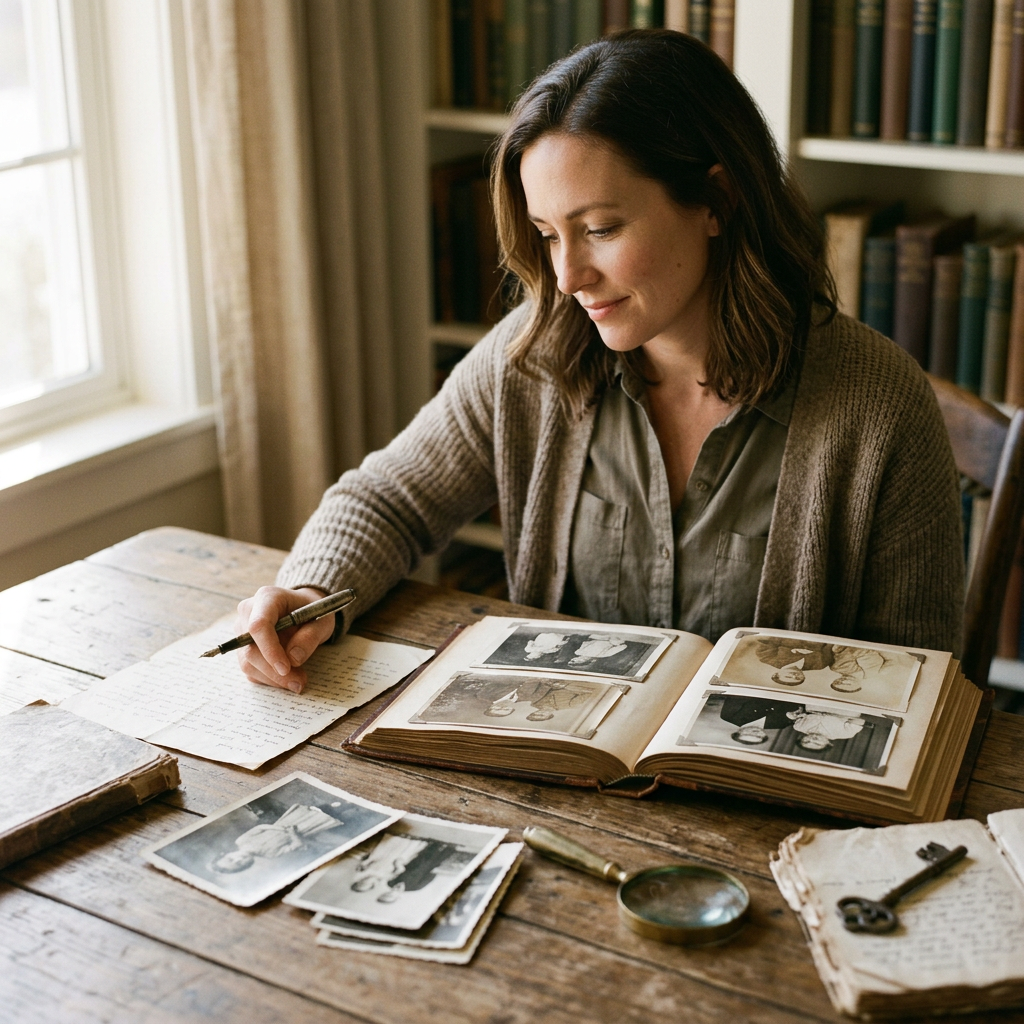
Most families know their loved ones by name and role. But the actual story of who they were, what shaped them, and what they carried? That part almost never gets asked for. And one day, it's simply gone.
You Know Their Name. You Know Their Role. But Do You Know Their Story?
Most of us can name our grandparents. We know what they did for work, roughly where they grew up, maybe a handful of details that surface at family dinners or get mentioned in passing at funerals. We know them by role: grandmother, grandfather, the quiet one, the funny one, the one who came from nothing and built something.
What most of us don't know is who they actually were.
Not the version that existed before we arrived. Not the person they were at twenty-two, or thirty-five, or in the years when life was hardest and they were figuring out how to keep going. Not the private fears, the roads not taken, the moments that shaped everything that came after. Those parts of a person live in a different layer, beneath the name and the role, and they almost never surface on their own.
This is one of the quietest losses in modern family life. And it happens slowly, without anyone deciding to let it.
We Confuse Familiarity with Knowing
There's a particular illusion that comes with spending years around someone. You see them at holidays. You share meals. You know their laugh and their habits and the topics that make them go quiet. It feels like knowing. And in many ways it is.
But familiarity is not the same as knowing someone's story. You can spend decades with a person and never hear about the year that changed them. You can love someone deeply and have no idea what they wanted from their life before the roles they played for you took over. You can grieve someone completely and still realise, standing at their funeral, that there were whole chapters of them you never got to read.
The psychologist Dan McAdams has spent his career studying how people make meaning of their lives through narrative. His research suggests that the stories we carry about our own lives, the ones we've constructed from memory, shaped around themes of struggle and growth and identity, are not just personal history. They are the architecture of who we are. When those stories go unshared, something genuinely irreplaceable disappears with the person who held them.
What We're Actually Losing
When someone dies without their story being recorded, what gets lost isn't just information. It's texture. It's the specific, unrepeatable quality of a life as it was actually lived by that particular person.
It's the reason your grandfather was the way he was with money. The thing that happened to your grandmother that made her the way she was about family. The choice your parent made in their twenties that they never fully explained, but that you could always feel the weight of. The version of them that existed before you knew them, the one that would help everything else make sense.
These aren't small things. They are the connective tissue of a family. They're what makes a person more than a name on a family tree, more than a date and a role and a few surviving photographs.
And yet most families lose them entirely, not through carelessness, but simply because nobody ever sat down and asked.
Why the Stories Don't Surface on Their Own
It would be easy to assume that the stories are there, waiting, and that all it takes is a little interest to draw them out. In reality, it's more complicated than that.
Most people don't think of their own lives as particularly interesting. They've lived them from the inside, which means the moments that feel extraordinary to everyone else can feel, to the person who lived them, like just the way things were. Your grandmother who crossed an ocean alone at nineteen doesn't necessarily think of that as a remarkable story. It was just what she did. She got on with things.
There's also the question of what feels safe to share. Many of the most important stories in a person's life are also the ones that carry the most weight: the losses, the regrets, the things that didn't work out, the parts of themselves they weren't sure anyone would understand. Those stories require a particular kind of invitation to emerge. They need someone who is genuinely curious, who is paying full attention, and who has created enough safety for honesty to feel possible.
And then there's time. The assumption that there will always be another chance, another Sunday, another visit when the moment is right and the conversation finally goes somewhere deeper. That assumption is the most common reason stories are lost. Not indifference. Just the quiet confidence that there's still time.
The Question Most Families Never Ask
Think about the people in your life whose stories you don't actually know. Not their name, not their role, not the surface details you've absorbed over years of being near them. Their actual story. What shaped them. What they wanted. What they're proud of and what they'd do differently. What they believed about life, and where those beliefs came from.
Now think about how rarely anyone asks.
Not because we don't care. Most people, if you press them, will tell you they wish they knew more about the people who came before them. They'll tell you they regret not asking while they had the chance. The gap between caring and asking is not a gap of love. It's a gap of knowing how to begin, of finding the right moment, of overcoming the small awkwardness of turning an ordinary visit into something more deliberate.
That gap is worth closing. And the only way to close it is to start the conversation before the chance is gone.
What Happens When You Do Ask
Something shifts when someone feels genuinely asked about their life. Not questioned. Not interviewed. But invited, with real curiosity, to tell the story of who they are and where they've come from.
People who have never spoken about certain things begin to speak. Not because the stories weren't there, but because nobody had created the conditions for them to surface. A well-placed question, asked by someone who is truly listening, can open up a conversation that covers more ground in two hours than decades of ordinary contact ever did.
And what comes out of those conversations changes the people who hear them, too. There is something that happens when you understand where someone came from, what they carried, what they overcame. It doesn't just fill in a gap. It reframes everything. The person you thought you knew becomes someone richer, more complex, more fully human. And your relationship to your own life shifts, because their story is also part of your story, whether you knew it or not.
The Names We'll Only Ever Know
There's a version of this that stretches back further than any living person can reach. Most of us know our family tree goes back for generations, but the names on those branches are just names. A birth year. A death year. A place. Nothing of what it was like to be them, what they hoped for, what they survived, what they loved.
That kind of loss is irreversible. Those stories are simply gone.
But the people alive right now, the ones whose names we know, whose voices we can still hear, whose hands we can still hold: their stories are not gone yet. They are still there, still held by a living person, still available to be asked for, still possible to preserve.
That window doesn't stay open forever. But it is open now.
At Life Story Guide, we help families have the conversations that matter most, before it's too late. Our expert conversational guides know how to draw out the stories that don't surface on their own, and we preserve them in beautifully crafted heirloom books, video recordings, and permanent digital archives. Start with a free trial interview at lifestoryguide.com
— Aby C. Abraham
Founder, Life Story Guide · Author, The Strangers We Love